SPARK Literacy Foundation funds Sound-to-Print (Linguistic Phonics) reading instruction for schools in the United States and around the world — the curriculum, the training, the coaching, and the teachers' time.
Every child can learn to read. No school should be priced out of it.
Mission
To ensure every learner, regardless of race, gender, or socioeconomic background, has access to high-quality Sound-to-Print (Linguistic Phonics) reading instruction, so all students become proficient, confident readers with access to knowledge and opportunity throughout their lives.
We work in the United States and internationally.
Our Method
For the last 150 years, reading programs have been built on one belief: that English is an unpredictable writing system that can't be fully decoded. If that's what we teach, it's no surprise that on the most recent Nation's Report Card (NAEP), about 7 in 10 fourth graders read below the Proficient level. That number has barely moved in decades.
There is a better way. Sound-to-Print (Linguistic Phonics) shows children that English is logical, consistent, and decodable. It takes a real shift in how we teach reading. SPARK Literacy exists to show schools that this shift is possible, so every student can become a strong reader.
SPARK stands for Sound-to-Print Access for Reading and Knowledge. Our mission is to bring this method to every child, family, and educator who needs it.
How we support literacy instruction.
Reading begins with the ear, not the eye.
Most reading instruction starts with letters and asks children to figure out which sounds they make. Sound-to-Print, also called Linguistic Phonics, works the other way. It starts with the speech sounds children already use every day, then shows them how those sounds are written. Children aren't learning a new code from scratch—they're learning to see the language they already speak.
For most schools, teaching this way is a fundamental change. Educators trained to start from letters have to start from sound, and the materials and daily routines have to change with them. SPARK was founded to help schools make that switch.
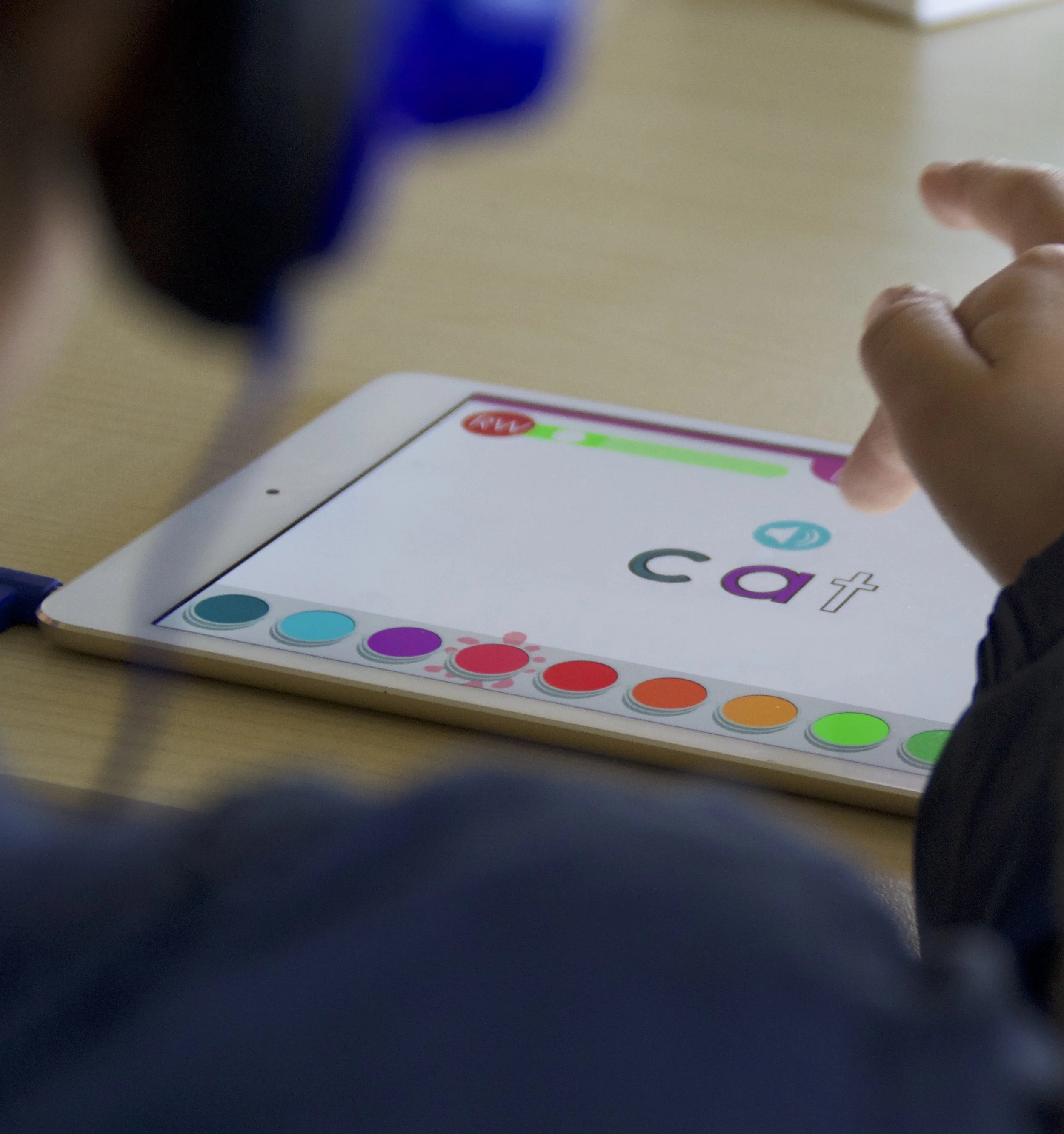
To support this work, Capit Learning makes its CAPIT Reading curriculum, built entirely on Sound-to-Print, available to schools through SPARK. CAPIT Reading has been evaluated by the Johns Hopkins University School of Education and holds an ESSA Tier 2 evidence rating.
What We Fund
Flagship Initiative
The Israel Bi-Literacy Project in Partnership with mindCET
Reaching under-resourced communities in Israel to ensure access to Hebrew and English literacy.


School grants: training, and teacher stipends
Grants to US schools and districts that grant access to the CAPIT Reading Sound-to-Print (Linguistic Phonics) curriculum, professional development for every teacher and stipends that pay teachers for their training time. Read more

Awareness and advocacy
Helping school leaders and families understand what Sound-to-Print (Linguistic Phonics) is and why it’s important for all students to access it when learning to read.
Coming soon

Research
We support cutting edge research on Sound-to-Print (Linguistic Phonics) and its impact on student literacy acquisition.
Coming soon
Founders
Tzippy Rav-Noy and Eyal Rav-Noy
The founders of SPARK Literacy Foundation have spent thirty years in education. For fifteen of those years, they ran an adult education nonprofit in Los Angeles. They then founded Capit Learning, the company behind CAPIT Reading. CAPIT Reading is a Sound-to-Print (Linguistic Phonics) curriculum available in English and Hebrew, and it has been validated by Johns Hopkins University School of Education. Over the years, they met many schools that wanted to use the method but could not afford the training needed to teach it well. They started SPARK Literacy Foundation to close that gap.